Witham Oaks Academy Belong, Experience, Flourish
Geography
Geography inspires children to raise and answer questions about the natural and human world and their involvement in this.
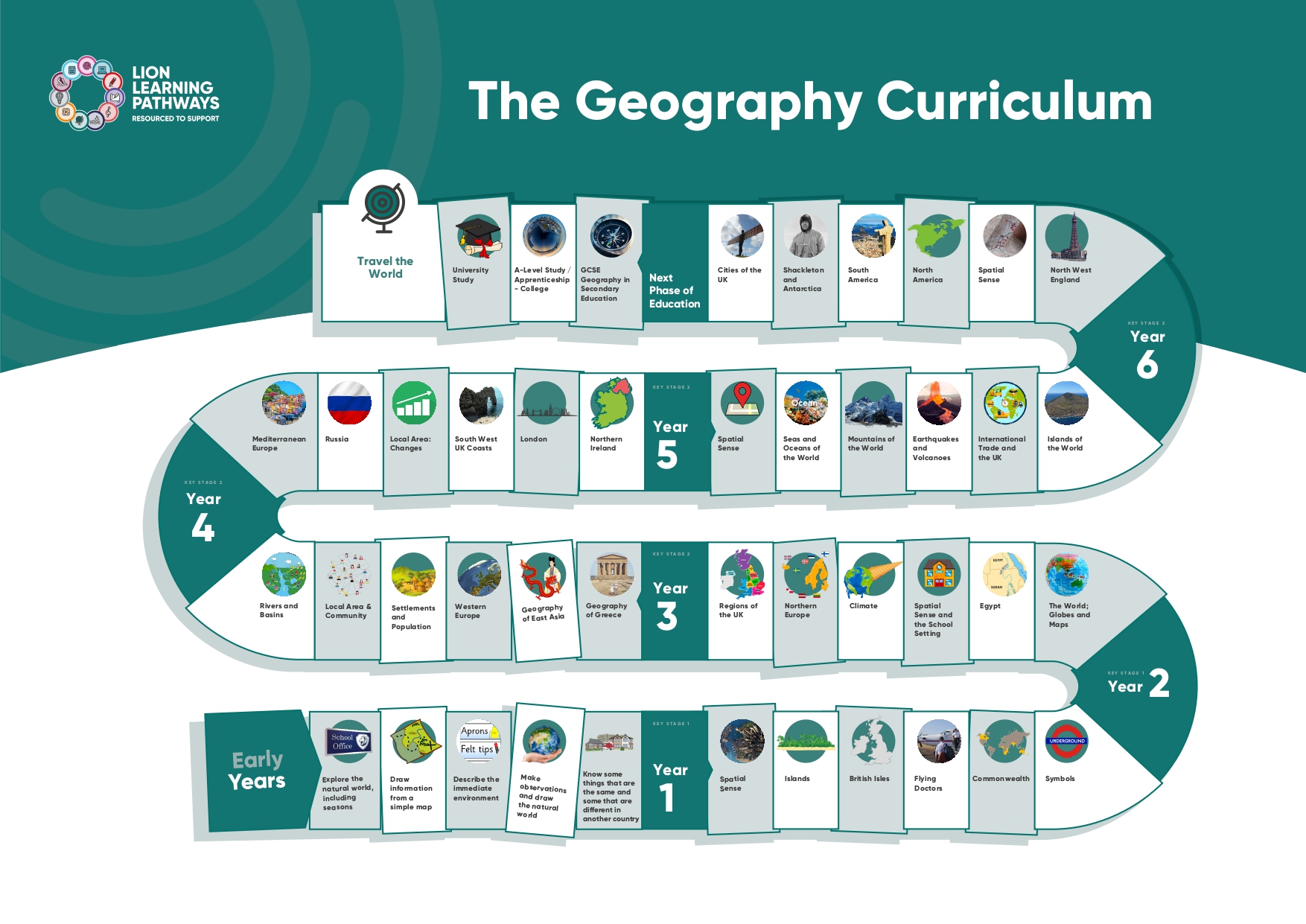
Our sequential Geography curriculum helps them gradually build the knowledge, skills and understanding to do that and to reflect, at every stage, on how they’re making progress and where they are heading. Along the way, they encounter different societies and cultures, and understand more about the nature of the environment and human habitats.
They also learn about their responsibilities to protect our fragile local and global environments. Our aim is that by the time they leave us, they are well prepared to openly discuss and debate how we are all interconnected and interdependent with people and ecosystems throughout the world.
Our curriculum:
- Builds progressively on key geographical knowledge and concepts, ensuring children develop a secure and connected understanding of places, environments, and spatial patterns.
- Develops children’s skills in geographical enquiry, including asking questions, collecting and analysing data, using maps and other sources, and drawing conclusions.
- Encourages children to understand the interactions between people and their environments, including the impact of human activity on the natural world.
- Provides opportunities for children to study local, national, and global contexts, helping them appreciate diversity and interdependence.
- Emphasises the use of accurate geographical vocabulary and technical terms to support clear communication of ideas.
- Ensures progression by sequencing content thoughtfully, allowing children to build on prior learning and deepen their geographical understanding over time.
- Incorporates time for consolidation and practice, enabling children to retain key geographical knowledge and develop their analytical and fieldwork skills.